About
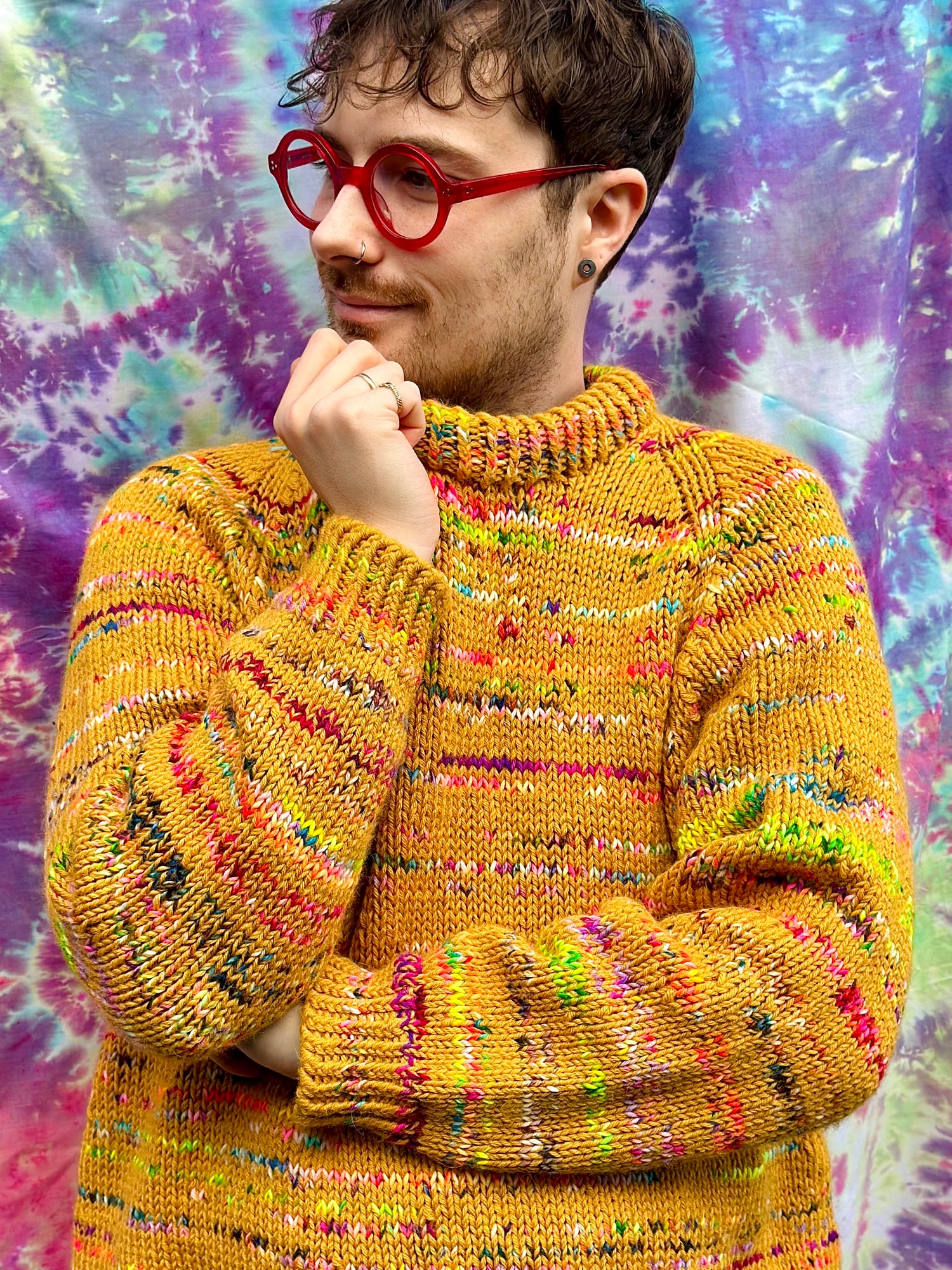
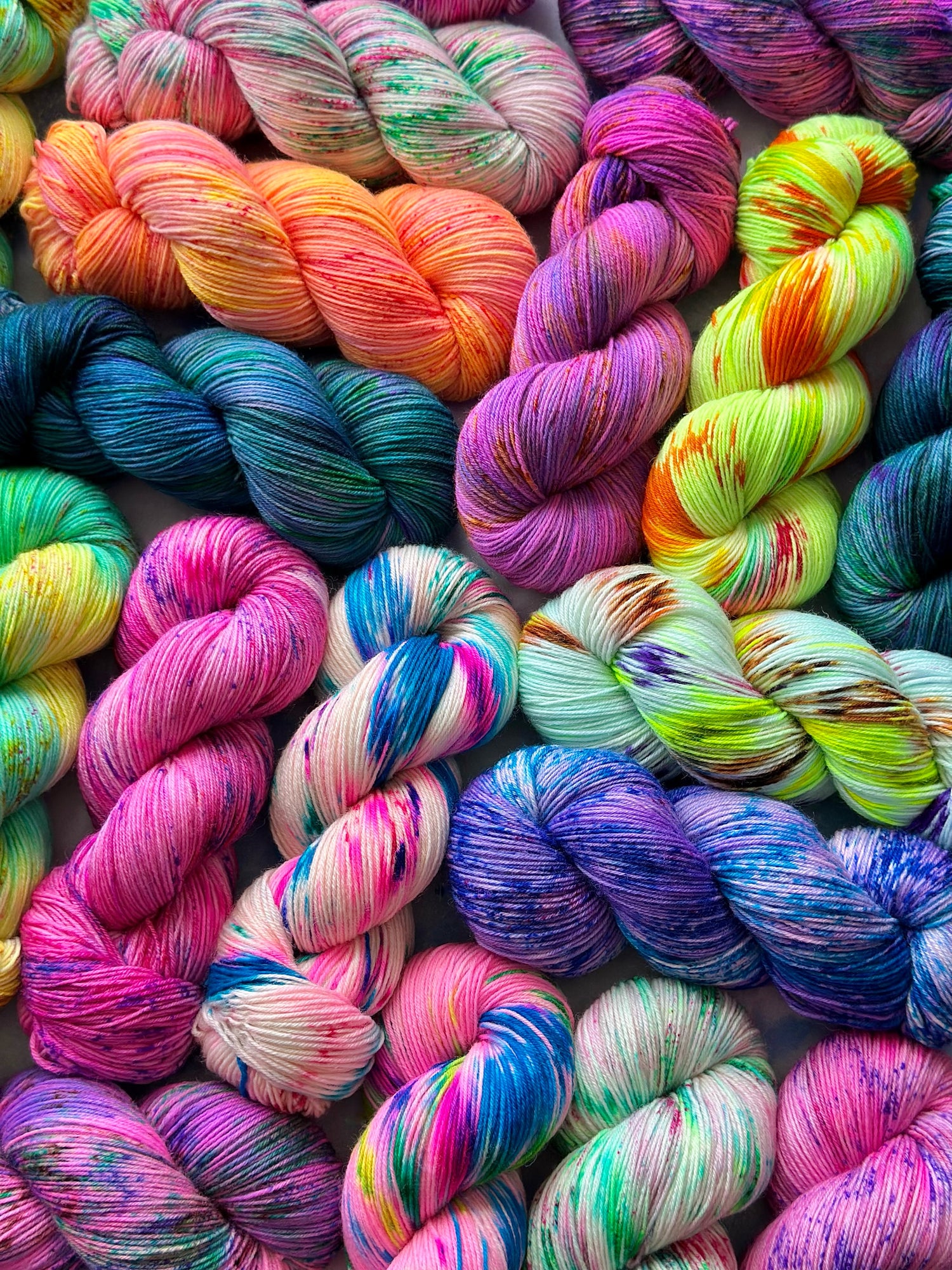
Hi :) I’m James, but people may know me best as James Makes Things from Instagram! I live and work in the beautiful Cotswolds and run my small batch hand dyed yarn business JAMESMAKESYARN from home. I adore all things colour and my desire is to always create one-of-a-kind colourways for colour fanatics, filled with speckles and unique colour combinations. You will be sure to find at least one pop of neon in every colourway I dye and the more bold and bright it is the better! JAMESMAKESYARN is home to not only beautiful and fun hand dyed yarns in a multitude of bases, but also sock knitting patterns, hand knitted accessories and project notions. At the heart of JAMESMAKESYARN is of course inclusivity and I strive on a daily basis to ensure it is open and welcome to everyone. Being a part of the LGBTQIA+ community myself, it is very important to me for JAMESMAKESYARN to be a safe space for everyone to enjoy. All of my yarn and patterns, now and in the future will be available to anyone and will not be gender specific or marketed to any particular gender or size. Thank you so much for your continued support, I really do hope you enjoy working with my yarns, because the world is a more beautiful place when we live and create in full colour!
James x
About my yarns
My Superwash Merino Wool comes from South America and is superwash treated in Europe to the highest OEKO-TEX® standard. The standard Merino quality is 21.5 microns, unless otherwise stated.
For more information regarding the sourcing of all of the different yarn bases I offer, please contact me with your questions and I will be more than happy to help!
What does superwash mean?
Superwash is a treatment applied to wool fibres that makes them more resistant to shrinking and changes the dye absorbability. Where I source my yarn is very particular about where their wool is superwash treated, but this is not true of all suppliers.
In the 1980’s superwash treatment had a bad reputation because in some countries the effluent was polluted and not recycled. This has, however, changed dramatically as the EU enforced very strict laws and any by-products must now be removed before water is discharged into the water systems.
Environmental accountability
The mill where my supplier gets their Merino processed is accredited with the EU Flower and OEKO-TEX® 100 schemes and runs a state-of-the-art effluent treatment plant. This means that the water is recycled and when discharged, it is cleaner than drinking water you get from the tap.
Superwash process
So what does the process involve? Firstly, the wool is treated with chlorine to dull the edges of the scales of the wool. This reduces the ability of the scales to stick to each other and therefore reduces felting. Secondly, a resin is applied and this creates a microscopic, web-like structure permanently bonded to the wool. This smooths the scales, improving the handle and preventing felting, whilst maintaining the dyeability.
Biodegradability of superwash fibres
Recent studies have shown that the type of superwash treatment my supplier uses biodegrades very quickly in compost and marine environments. This means that they leave no residue, unlike other superwash treatments. Some other shrink-resistant treatments can inhibit the dyeability of the wool which is why they are not suitable for their yarns.
On balance I like superwash yarns because they make wool more accessible to people who would not be able to hand wash items on a regular basis. They have good longevity, but biodegrade rapidly when composted.
Mulesing free
All of my yarn is mulesing free.
My merino is from South America, not Australia.